Listening Before the Music Begins
Before the first note is played, listening has already begun. This essay explores how walking through the landscape around Nextones in Italy becomes part of the listening experience, blurring place and performance.
The walk begins, single file, following a local guide who, at the beginning of the route, recounts the vicissitudes and difficulties of preventing the area from being exploited for economic gain via the construction of a hydroelectric plant. We slowly move away from the noise of the campsite; the chatter and the low frequencies of the speakers gradually fade away.
And then, the roar of the fast-flowing river, the songs of various birds, the echo of cars speeding along the provincial road. The crunch of shoes on rocks, on damp earth, on dry leaves. The mix of languages and cadences, the shortness of breath as we tackle the climb, the melody of «American Pie» sung and released into the air, a few laughs.
The sound of the wind through the fruit trees – pears, apples, and kiwis – contrasts with the voices of those amazed at seeing them, some for the first time, at touching and feeling them unripe, and realizing they must wait for nature's timing, unable to consume them immediately.
We arrived in Ghesc, an open-air «laboratory village» being restored to as it was during the 15th and 16th centuries, constructed entirely of stone, from walls to roofs. Kenichi Iwasa's performance takes place in an amphitheatre. When it begins, the echo of footsteps and the splash of water against the rocks still linger in our ears, mingling with the sounds produced by nature that the artist recorded in Ghesc and incorporated into the performance. These sounds are paired with a «hybrid instrument positioned between a flute and a horn», developed with lighting designer Charlie Hope. The feeling in your ears is like the fruits suddenly ripening, and after waiting, we can finally taste them.

▛

What happened in Ghesc revealed something fundamental about the Nextones Festival in Val d'Ossola, Northern Italy. Active participation from the listener is required to fully enjoy every performance. Being present with the place plays a fundamental role. Just by observing people enjoying themselves in nature or making their way to the next performance, you can imagine the sound of the natural elements resonating in your ears, and you can be sure that they will be audible in performances in the near future.
Stylish individuals, mostly from urban backgrounds, emerge from their tents in the morning and place their overflowing makeup bags on the plastic sinks set up for the occasion. They have come to escape their daily routines and experience a different way of life for a few days. There are also experienced campers who love nature and hiking, music enthusiasts, and valley residents driven by curiosity and the desire not to miss this important annual event.
The community gathers in front of the performances; you hear whispered eagerness and excited murmurs that become part of the soundscape, particularly when the voices mix with the performances. As such, moving around the venue, at some points, the music becomes background to the overall sonic experience. Different people add polychoral voices to the performance, forcing listeners to choose what to pay attention to and how to listen to their surroundings.
Artists use tools and objects evocative of the surrounding environment, and the attendees can adopt the study of performance from a visual and light engineering point of view. So you can play rocks with rocks, like Daniel Blumberg, and get lost in a game of reverberations, where the instrument itself seems to belong directly to the venue. But you can also project reel-format videos onto the rock, whose protagonists become the performers in real time; the crowd's eyes glue together, as if one source of entertainment is never enough to keep the attention high, like in the performance of Alessandro Adriani and Ariella Vidach. There is sometimes an attempt to capture what is happening through filming, an attempt to reconnect with the daily frenzy and performativity, but the videos last a few seconds; they try to fix an improvisation in time, allow it to be shared according to the now traditional cultural logic, but these are fleeting moments. The cell phones are lowered, and we return to our dialogue with the surrounding environment.

▛

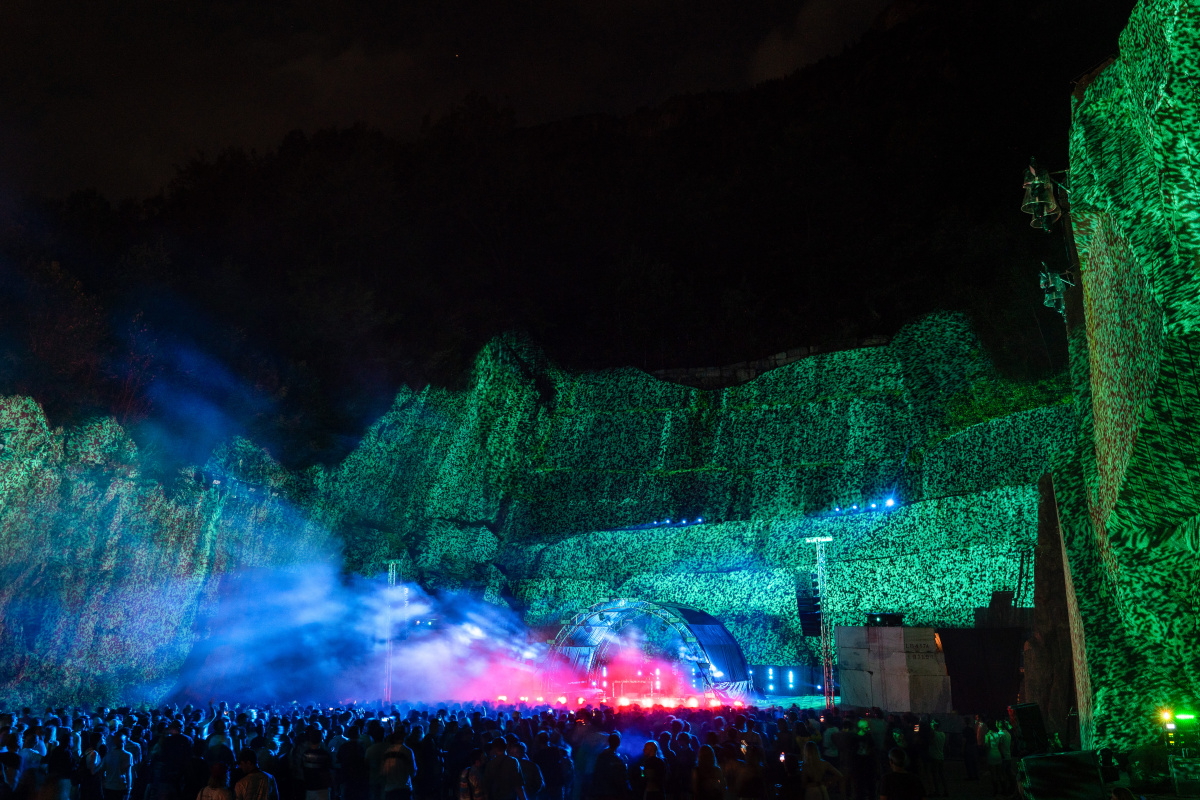
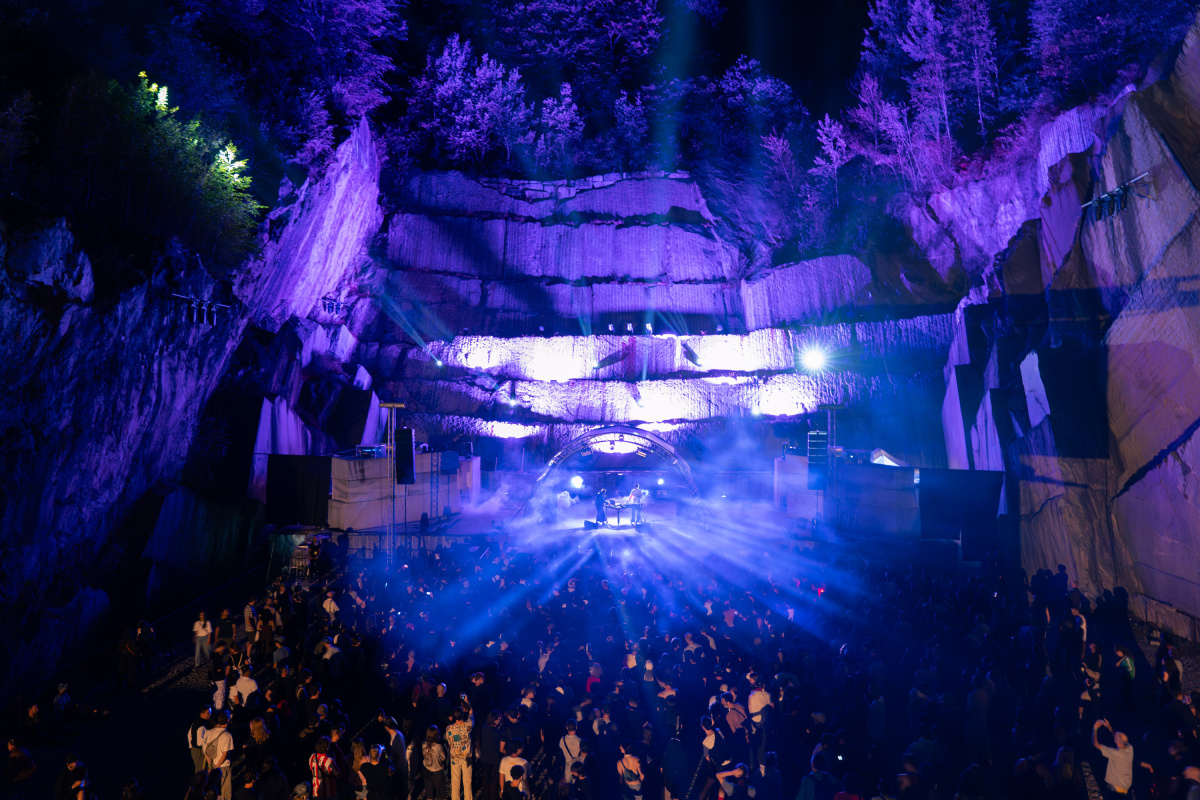
The screen of the phone is insufficient to capture the collective feeling during these performances in an abandoned quarry, the reverberations, like those of the Tones Teatro Natura. Perhaps it is precisely the relationship with the landscape that makes the experience so unique. It invites us to be present and rethink how we listen every day.
This essay is part of a collaboration with Nextones Festival 2026 in the Ossola Valley. Performances and site-specific listening sessions took place from July 16-19 in natural environments, thermal baths, medieval villages, and canyon landscapes in Northern Italy, with its epicenter being Tones Teatro Natura.
Biography
Published on August 20, 2026
Last updated on August 24, 2026
Topics
How do acoustic environments affect human life? In which way can a city entail sounds of repression?
From instruments made of plastic waste of the ocean to questions about a futurist naturalism which embraces technology for aesthetic emancipation.
A generative practice that promotes different knowledge. One that listens is never at a distance but always in the middle of the sound heard.
From Bangladeshi electronica to global «black midi» micro scenes.
Does a crematorium really have worst sounds in the world? Is there a sound free of any symbolic meaning?
What is «Treble Culture»? How does what one hears affect what one sees?
Snap