Where Space Becomes Sound
Why are artists increasingly drawn to uncertainty? Through site-specific concerts at the Nextones Festival in the Italian Alps, our author explores a growing desire for performances shaped by nature, chance, and immersion.
«In 1876, Wagner opened his theater in Bayreuth to have the perfect place to perform his music with the best acoustics, avoiding any uncertainty. Today, as I plan the performance, I'm ready to listen to every detail and reverb that may arise from performing in such a place as the Orridi di Urezzo, in order to shape the performance».
These words come from Shane Parish, but they seem to express a more general attitude among artists today. In an era where technology allows us to chase the cleanest sound possible without interference and record every moment in high fidelity, some people, both artists and audience members, seek something more. It’s not only a question of sound, but also of control. It takes courage to admit that, at least, as far as music is concerned, it’s possible to lose control and be present, feel something unique to the moment, and let the location contribute to this feeling and experience. Is the desire to embrace this uncertainty a reflection of the broader global geopolitical situation, in which planning for the future requires courage? Or is it a reaction to daily life in an increasingly complex, structured, and regulated society?
In this sense, the environment plays a key role for artists because it allows them to engage with this uncertainty. For them, sound is shaped without the ability to fully control it. Artists have to deal with this, and rather than waiting for a soundcheck, they wait for sonic inspiration to develop something new. They wait to listen more vividly and draw inspiration from what they hear in such surroundings. So, what happens when a place becomes part of a composition?

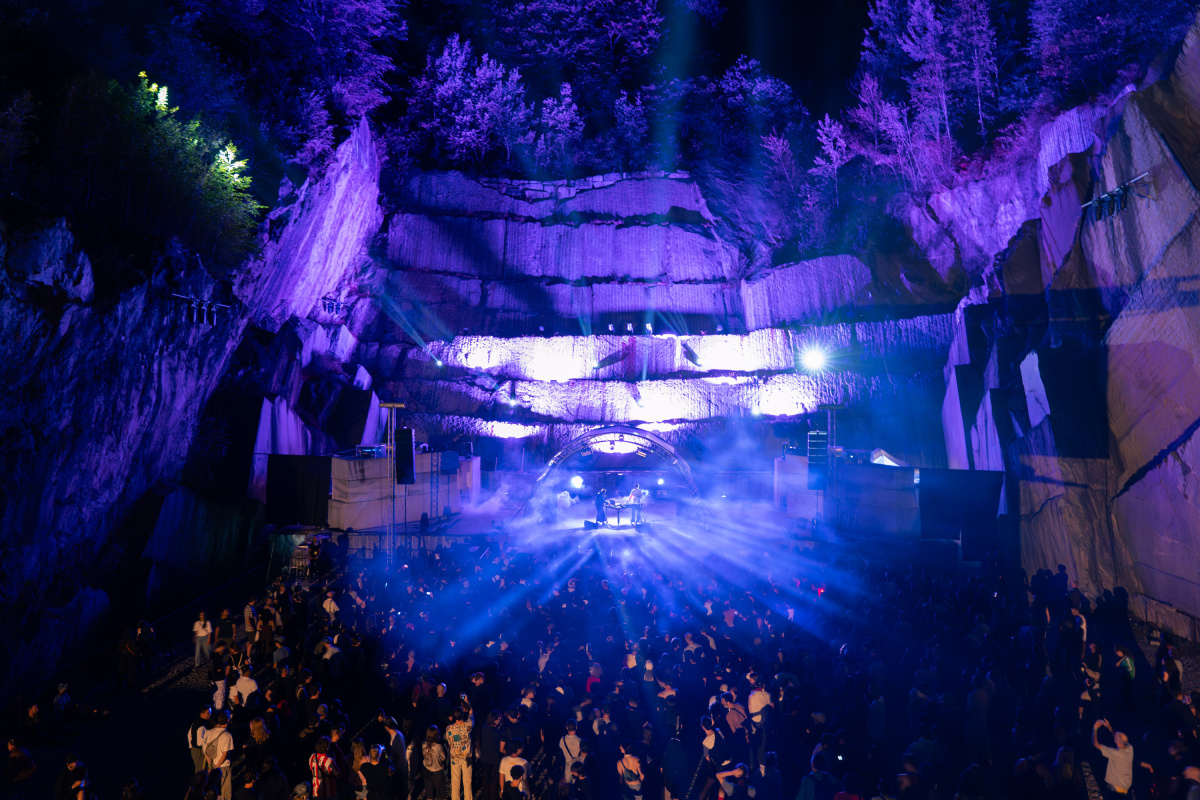
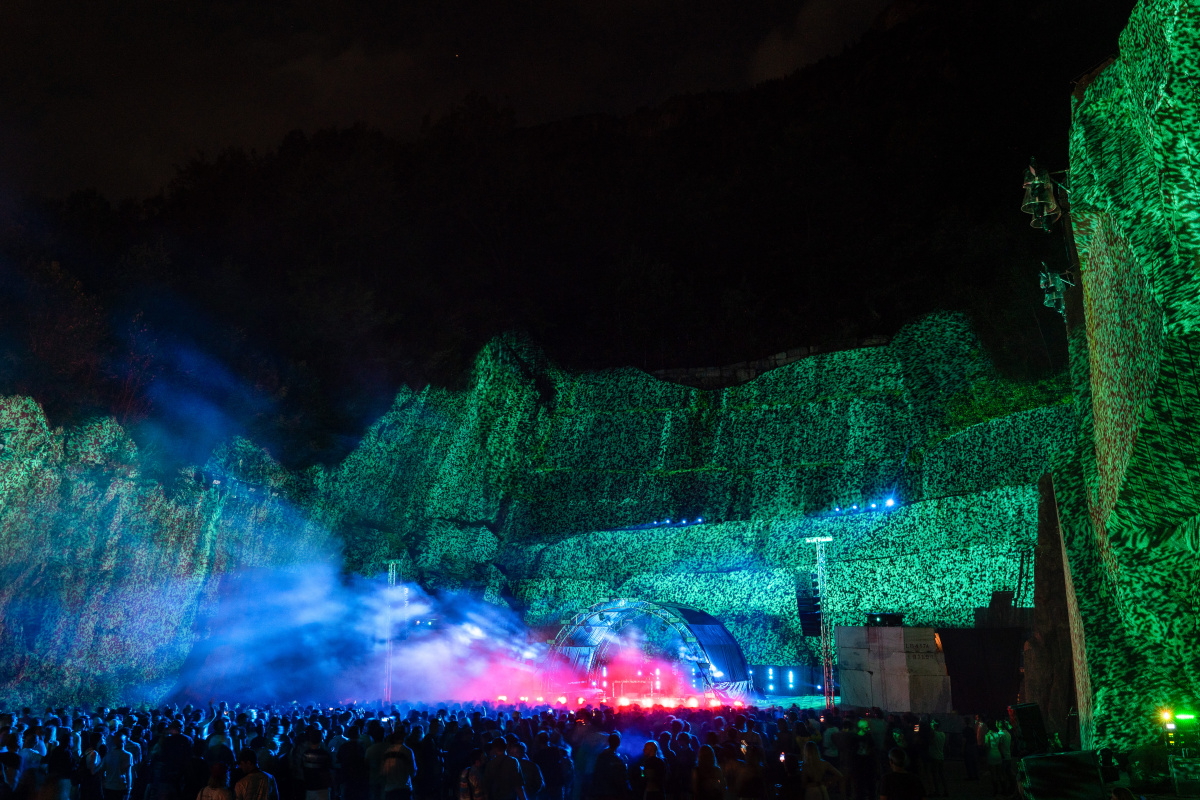
Shane Parish will perform at Nextones Festival, which combines music, landscape, and artistic research. Taking place in Val d'Ossola, a peripheral Alpine region, the festival allows people to live in harmony with nature for four days. Attendees sleep in tents and go on excursions throughout the region. Some of them unknowingly used the same words and expressed similar feelings about what a performance should be like in a place like this nowadays. When arranging a performance, the four artists consider what type of music best fits the space, what kind of instrument could help build the right narrative, and how to improvise based on the audience and surroundings.
Feel it In Your Bones
For instance, Shane Perish chose to arrange Autechre’s music for guitar because, in his opinion, their music is already ambient and will resonate well in a setting where sound can vibrate in harmony with nature. Laura Masotto, on the other hand, seeks to bring a sense of inner connection and reflection to her music, similar to what she experienced during rituals in Guatemala. She blends strings and electronic sounds, brings shakers onto the stage, and leaves room for improvisation. «I come neutral, and I leave as part of the whole», says Kenichi Iwasa. For the occasion, he is building a brand-new handcrafted instrument, something between a flute and a horn, and is planning to combine composed elements for wind instruments with on-site field recordings and electronic processing. Once again, nature and the surroundings shape and participate in the performance.
The festival's design creates a strong connection with the landscape, resulting in a sense of immersion that music can only enhance. Michela de Mattei and Palm Wine best represent this idea with their performance, an underwater listening session. «You can't hear anything outside. You need to be completely submerged. Sound travels much faster in water, and it is perceived through bones and tissues, especially the skull».
They all want to create an immersive experience. In order to listen to a place and incorporate it into a performance, you have to be there. Feel it in your bones. Hold onto the sound, and then let it go. Perhaps this is also why such experiences resonate today.
Beyond the landscape itself, they invite artists and audiences into situations that cannot be fully planned or controlled. Weather, acoustics, bodies, technologies, and chance encounters all become part of the composition. Whether this reflects a broader desire to escape certainty remains an open question. But it may explain why so many artists are once again willing to let a place shape the music as much as the music shapes the place. Norient will be there to witness it.
This essay is part of a collaboration with Nextones Festival 2026 in the Ossola Valley. Performances, site-specific listening sessions will take place from July 16-19 in natural environments, thermal baths, medieval villages, and canyon landscapes in Northern Italy – with its epicenter Tones Teatro Natura.
Biography
Published on June 01, 2026
Last updated on August 31, 2026
Topics
A generative practice that promotes different knowledge. One that listens is never at a distance but always in the middle of the sound heard.
From instruments made of plastic waste of the ocean to questions about a futurist naturalism which embraces technology for aesthetic emancipation.
What’s the idea behind a traditional brass band from Vienna playing at 5 am in the morning? How does physical presence of artists affect the music they play?
Snap