A Frequency Called Gaza
He left Gaza, but it did not leave his ears. A Palestinian sound engineer reflects on how a place becomes a frequency that follows you into exile. What happens when you can no longer filter it out? Read a new essay from the Sonic Worlding series. Arabic version below
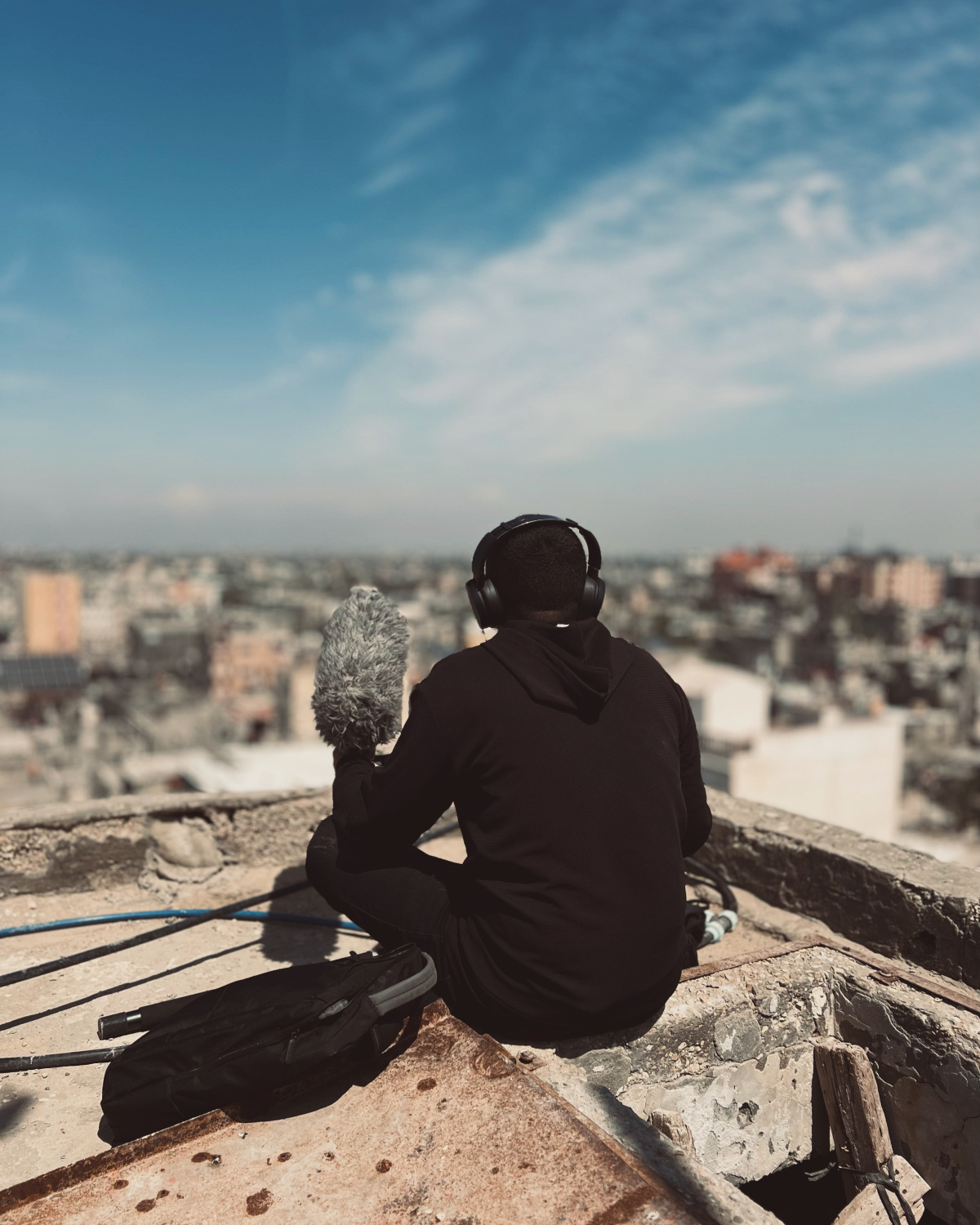
My work as a sound engineer has always involved chasing fleeting sounds of speech and capturing vibrations. In Gaza, I did not merely record sounds; I gathered the very breath of the city itself and all its details, both large and small. Yet, whenever I pointed my microphone toward the stories – toward the sea, whose faint roar breaks the monotony of the blockade; toward the vegetable markets; and toward the fleeting laughter of children – the digital reading on my screen would always settle on a single, heavy frequency: the sound of silence.
It was no ordinary silence, but one thick with anticipation, a silence that precedes tragedy. And when people spoke into my microphone, it was not the words that were recorded, but the pain latent in their voices – a weary tone punctuated by faint noises produced by helplessness.
I recounted tales of horror and hope; I recorded the fear in the breaths of the young, the death that suddenly colored the horizon, and the will to live clinging to the whispers of loving mothers and the moans of the wounded that filled the hospitals and corridors. I observed the bewilderment in the eyes of fathers who did not know where to flee, and blended it with the sound of shelling that shook the very foundations of existence. Gunfire tore through the stillness of the night.
These metallic frequencies were etched into my ears: the whine of reconnaissance aircraft that never leave the sky, as if in a never-ending nightmare; the whistling of bomber aircraft as they cut through the air heading toward their target; and the roar of tanks as they crush tarmac and memories, reducing them to dust.
Not even living creatures were spared from my microphone’s filters; I recorded the sounds of birds fleeing death as they flew through the sky with wounded awareness, and the panic of animals that had lost their way amidst the flames.
A silent hunger echoes: the clatter of empty pots and pans while searching for a morsel to stave off hunger, the rustling of footsteps belonging to people weighed down by worries, and the sound of trembling, fearful steps that do not wish to face death, yet are driven towards it against their will.
Spiritual Mixer
When my family and I packed up our remaining dreams and crossed the border on an arduous journey to the Netherlands, I naively thought I had left that spiritual mixer behind me. But during the asylum process, my ears became an unfiltered, open recording device, picking up everything. The sounds blended together like a song with a discordant rhythm: the chatter of travelers in various languages, the sighs of fear in the waiting rooms, and the cries of children at the immigration gates.
With every new sound I heard, my subconscious would rearrange it, translating it into a single frequency: Gaza. The places changed, but the frequency remained the same. I am here now, in the Netherlands. The streets are bathed in the purity of my ideal sound. The canals flow calmly, bicycles and people glide by, unbroken by the specter of death.
But my trained ear has malfunctioned. I find myself standing in the midst of bustling European squares, and without realizing it, I press the mute button on everything around me. The clamor of this country is completely shut out, replaced by that old Gazan silence. I hear the roar of a tank in a bus engine, and I hear the moans of the wounded in the gusts of wind. But deep down I hear nothing but the echo of the weary souls I once recorded there.
They say that a skilled sound engineer is one who can filter out background noise to bring out the pure, essential sound. Today, I realise that Gaza was never just passing noise that I could filter out with the click of a button. It is the master-tape upon which my soul was imprinted.
I survived with my family; we reached safety, and I shall learn to listen to the new melodies of peace in our exile. But even if my microphone were to record the sounds of the gentle breeze in the Dutch fields, deep within it would still echo that abandoned land … and it would remain faithful to the voice of Gaza.
Arabic version
ترددٌ اسمه غزة
غادرَ غزةَ، لكنّها لم تُغادرْ أُذُنَيْه. يتأمَّلُ مهندسُ صوتٍ فلسطينيٌّ كيفَ يُصبحُ المكانُ تردُّداً يتبعُكَ إلى المَنفى. فماذا يحدثُ عندما لا تعودُ قادراً على تصفيتها؟
لطالما كان عملي كمهندس صوت يتمثل في مطاردة أصوات الكلام العابرة والتقاط الاهتزازات. في غزة، لم أكن أكتفي بتسجيل الأصوات فحسب؛ بل كنت أجمع أنفاس المدينة ذاتها وجميع تفاصيلها، الكبيرة منها والصغيرة. ومع ذلك، فإن المفارقة المؤلمة هي أنه كلما وجهت ميكروفوني نحو القصص — نحو البحر، الذي يكسر هديره الخافت رتابة الحصار؛ وأسواق الخضار؛ وضحكات الأطفال العابرة — كانت القراءة الرقمية على شاشتي تستقر دائمًا على تردد واحد ثقيل: صوت الصمت.
لم يكن صمتًا عاديًا، بل صمتًا كثيفًا بالترقب، صمتًا يسبق مأساة. وعندما كان الناس يتحدثون في ميكروفوني، لم تكن الكلمات هي ما يُسجَّل، بل الألم الكامن في أصواتهم — نغمة مرهقة تتخللها ضوضاء خافتة لا تنتجها الآلات، بل العجز.
كنت أروي قصص الرعب والأمل؛ أسجل الخوف في أنفاس الشباب، والموت الذي يلوّن الأفق فجأة، والحياة التي تتشبث بالبقاء في همسات الأمهات الحنونات، وفي أنين الجرحى الذي يملأ المستشفيات والممرات. كنت أراقب الحيرة في عيون الآباء الذين لا يعرفون إلى أين يهربون، وأمزجها بصوت القصف الذي يهز أركان الوجود ذاتها. مزقت طلقات الرصاص سكون الليل.
وقد حُفرت في أذني تلك الترددات المعدنية: أنين طائرات الاستطلاع التي لا تغادر السماء أبداً، كما لو كانت في كابوس لا ينتهي؛ وصفير طائرات القصف وهي تخترق الهواء متجهةً نحو هدفها؛ وهدير الدبابات وهي تسحق الأسفلت والذكريات وتحولهما إلى غبار.
لم تسلم حتى الكائنات الحية من مرشحات ميكروفوني؛ فقد سجلت أصوات الطيور وهي تهرب من الموت وهي تحلق في السماء بوعي مجروح، وذعر الحيوانات التي ضلت طريقها وسط النيران.
يتردد صدى جوعٍ صامت: قعقعة الأواني الفارغة التي تبحث عن لقمة تقي من الجوع، وحفيف خطوات أناس أثقلتهم الهموم، وصوت خطوات مرتجفة خائفة لا ترغب في مواجهة الموت، لكنها تُدفع إليه رغمًا عنها.
المازج الروحي
عندما حزمنا أنا وعائلتي أحلامنا المتبقية وعبرنا الحدود في رحلة شاقة إلى هولندا، ظننتُ — بسذاجة — أنني تركتُ ذلك «المازج الروحي» ورائي. لكن خلال إجراءات اللجوء تحولت أذناي إلى جهاز تسجيل مفتوح بلا مرشحات، يلتقط كل شيء. امتزجت الأصوات معاً كأغنية ذات إيقاع متنافر: ثرثرة المسافرين بلغات متنوعة، وزفرات الخوف في قاعات الانتظار، وصراخ الأطفال عند بوابات الهجرة.
مع كل صوت جديد أسمعه، كان عقلي الباطن يعيد ترتيبه، مترجماً إياه إلى تردد واحد: غزة. تغيرت الأماكن، لكن التردد بقي كما هو.
أنا هنا الآن، في هولندا. تُغمر الشوارع بنقاء الصوتي المثالي. تتدفق القنوات بهدوء، وتنزلق الدراجات والناس بانسيابية، في إيقاع لا يعكره شبح الموت.
لكن أذني المدربة قد تعطلت. أجد نفسي واقفاً وسط الساحات الأوروبية الصاخبة، ودون أن أدرك، أضغط على زر كتم الصوت لكل ما يحيط بي. يُستبعد صخب هذا البلد تماماً، ليحل محله ذلك الصمت الغزاوي القديم. أسمع هدير دبابة في محرك حافلة، وأسمع أنين الجرحى في هبوب الرياح، لكن في أعماقي لا أسمع سوى صدى الأرواح المرهقة التي سجلتها هناك ذات يوم.
يقولون إن مهندس الصوت الماهر هو من يستطيع تصفية الضوضاء الخلفية لإبراز الصوت النقي والأساسي. واليوم، أدرك أن غزة لم تكن أبدًا مجرد ضوضاء عابرة يمكن لي تصفيتها بنقرة زر واحدة. إنها الشريط الأم الذي انطبعت عليه روحي.
لقد نجوت مع عائلتي، ووصلنا إلى بر الأمان، وسأتعلم الاستماع إلى ألحان السلام الجديدة في منفانا. لكن حتى لو سجّل ميكروفوني أصوات النسيم العليل في الحقول الهولندية، فسيظل في أعماقه صدى تلك الأرض المهجورة… وسيبقى وفياً لصوت غزة.
Working with Palestinian director Hossam Hamdi Abu Dan, sound engineer Mohamed Yaghi leads an auditory journey that reflects the impact of war in the film Gaza Sound Man. The film was screened at the Norient Festival 2026, followed by a live transmission featuring Mohamed Yaghi.
Biography
Published on August 04, 2026
Last updated on August 12, 2026
Topics
What is «Treble Culture»? How does what one hears affect what one sees?
How does Syrian death metal sound in the midst of the civil war? Where is the border between political aesthetization and inappropriate exploitation of death?
How do musicians fill or widen the gap of feeling at home in a world that is radically unhomely?
Special
Snap