Listening Is Not Neutral
Before archives fix meaning, frequencies move. An opening conversation for the new Norient publication on listening, sonic pluralism, and the politics of what is heard – and what remains unheard.
Hi Philipp,
While we were working on this online special, you asked me how the programme There is More to it than Casablanca came to be.
As part of the Ultima Oslo Contemporary Music Festival, There is More to it than Casablanca (TIMTITC) was inspired by the notion of sonic pluralism – a listening practice that sees sound as shaped by place, memory, and movement. This is a concept coined by Gilles Aubry in the book Sawt, Bodies, Species, published here at Norient, which explores how diverse acoustic practices in Morocco challenge dominant listening habits.
Referring to the 1940s film Casablanca, which romanticizes Morocco while silencing local voices, the programme invited those who came to join to listen differently, to stories rooted in lived experience and reimagined across borders, history, and diaspora. The programme invited communities with ties to Morocco to come together – to listen.
Moroccan culture blends Arab, Amazigh, Andalusian, African, and European influences. After independence in 1956, music became central to decolonisation, as artists reclaimed oral traditions, rhythms, and languages.
Today this legacy continues through artists like Leila Bencharnia, who performed with her work Fatema U Trab (Fatima and the Dust), offering a sonic delve into Gnawa tradition and a tribute to the role of women as weavers to sustain their communities.
She also spoke about her work with researcher Fatima-Zahra Lakrissa, who wrote an essay on Leila’s work for this online special. But also through filmmaker, photographer and DJ Mohamed Chakiri, who introduced the Trances film – which is an important reference for him – and who also designed the snaps for this special.
Not all contributors came from Morocco. Francesca Ceccherini of the Swiss collective Zaira Oram presented Abdellah M. Hassak’s work A Symphony of Archives, of which an excerpt is included here, and Gilles Aubry shared his composition L’Makina for live electronics, as well as his films Salam Godzilla and L’Makina. Lawrence Abu Hamdan’s reflections on the sonic politics of the sky opened up yet other geographies.
We also invited you to introduce us to the recent Norient book Home Is Where The Heart Strives (HIWTHS), on how music and place are entangled. How was the editing process?
Hi Katía,
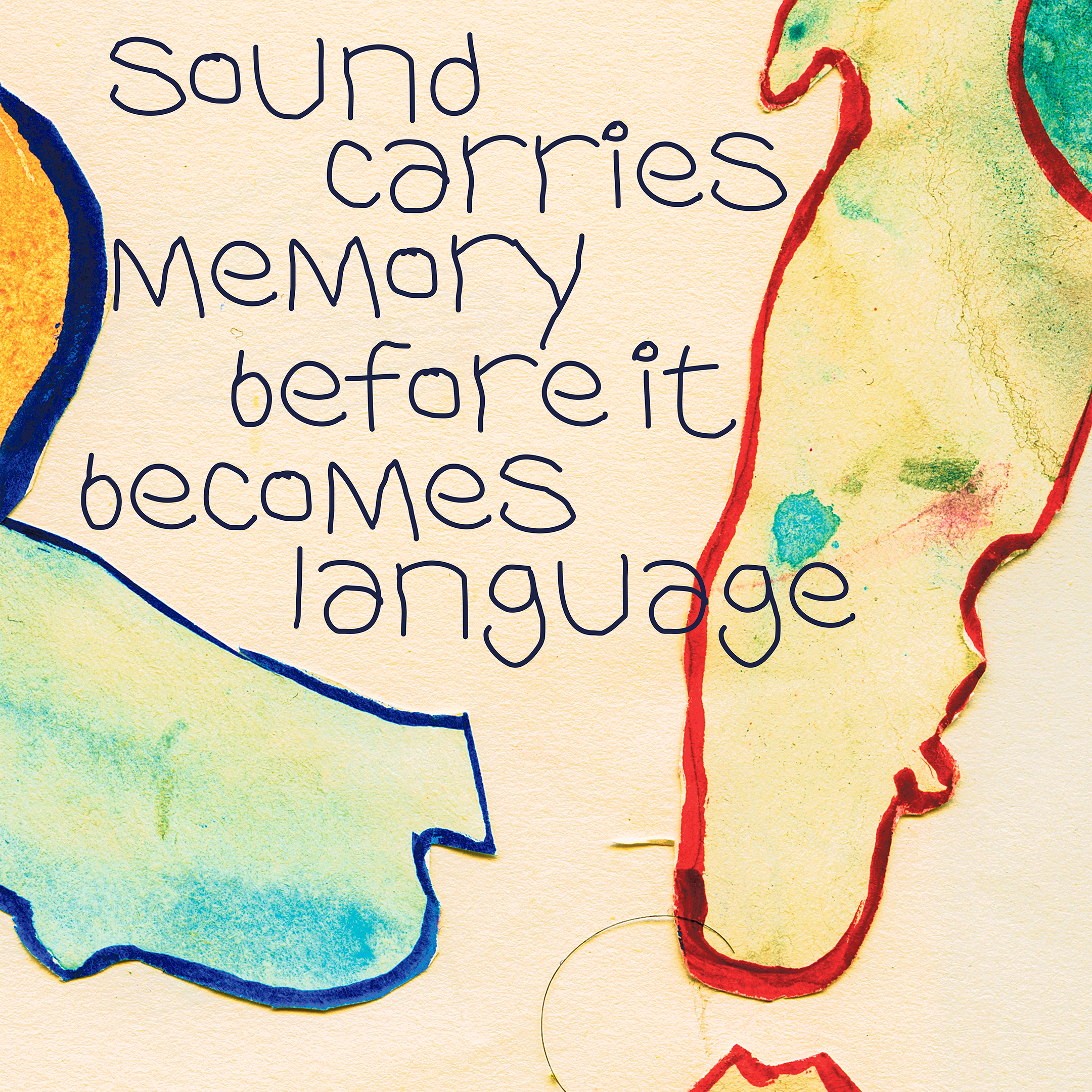
Thank you for your rich thoughts. While listening to the program at the Ultima Festival, I was like: what happens if one treats editing as a form of listening rather than only ordering? Working on the book HIWTHS felt like that. The book came together not around a single narrative of migration or belonging, but around how sound carries memory before it becomes language.
In Tanasgol Sabbagh’s essay «Dard I Door», the sound of breathing becomes fragments through which displacement is sensed rather than explained. Sound operates there as a fragile bridge between narrated grief and lived experience. In Umi Hsu’s Dwelling and Dance: Field Notes on the Body, tinnitus becomes a form of orientation – a continuous tone that guides the body through memory, migration, and space. Noise as a way of locating oneself when place itself has become unstable.
What connects these texts to TIMTITC is that sound does not appear as heritage to be preserved, but as something mobile.
In our new online publication the recordings, essays, and conversations do not aim to define what sound means in a given context. They create listening situations in which different sonic knowledge can coexist – sometimes in tension, sometimes in resonance. Editing, here, becomes an act of tuning: creating the conditions in which frequencies meet without needing to align.
When does curating stop being about framing content and start becoming an act of listening? How to navigate the tension between creating a space for listening and the risk of fixing sound into narratives of representation – especially in a moment marked by war, displacement, and censorship?
Dear Philipp,
Thank you for sharing these thoughts! I like your reflection on editing the book as a form of listening, rather than ordering. And how the contributions to HIWTHS as well as the artists involved in TIMTITC approach sound not as something fixed from the past, but as something that travels.
You are asking when curating stops being about framing content, and starts to become an act of listening. In the case of TIMTITC, the process was similar to the tuning process you describe: creating conditions in which frequencies meet without needing to align. It’s perhaps also like weaving, where it starts with a conversation, which leads to another conversation and more contributors getting involved, bringing different practices, perspectives and positions. It’s an important tension that you mention, between creating a space for listening and fixing sound into narratives of heritage or identity, especially in these times. Hopefully this online special can offer a space – where to question these narratives and narrate different stories. What do you think?
Dear Katía,
It’s so cold here in Berlin. The sidewalks are covered with a thick layer of ice. We in Berlin take this for granted: the constant risk of slipping, the rising number of serious injuries. And then, a friend from Western Germany was visiting recently, and told me that everyone outside of Berlin is furious about that.
I was struck by the reactions it provokes – the moral certainty – and we laughed, as if to spook the ghosts of a world locked in a toxic relationship with fabricated polarisation.
Maybe this difference is a question of habituation – and of how perception shifts depending on where one stands.
It's interesting how often you return to metaphors of continuity – tuning, weaving, conversation – as ways of keeping listening open. How open is listening when it moves across closed forms, fixed works, or inherited structures?
Maybe Tim Rutherford-Johnson’s essay can help a little. Listening to Ahmed Essyad speak about «treason» – about the inevitability of being unfaithful when moving between musical cultures – Tim insists on treason as an act that exposes the terms, hierarchies, and asymmetries under which listening takes place. Treason does not oppose listening – it sharpens it. To listen across archives, territories, and traditions also means deciding where one stands, what one carries forward, and what one cannot faithfully transmit.
Biography
Biography
Published on September 19, 2026
Last updated on March 19, 2026
Topic
A generative practice that promotes different knowledge. One that listens is never at a distance but always in the middle of the sound heard.
Special
Snap